


Focus of the Month For Nurses

Medical Cannabis and Conditions Affecting Assigned Female At Birth and Intersex People (for Nurses)
5 Credit
Designed for nurses, this course delves into a range of conditions that are uniquely prevalent among people assigned female at birth and intersex individuals with female reproductive organs. These conditions often go under-recognised and can profoundly affect health and quality of life. Conventional treatments sometimes fail to fully address these issues and can carry significant risks.
With medical cannabis emerging as a promising alternative, this course offers evidence-based insights into its potential for managing symptoms of:
Endometriosis
Dysmenorrhoea
Polycystic Ovary Syndrome (PCOS)
Premenstrual Dysphoric Disorder (PMDD)
Postpartum Depression (PPD)
Breast, ovarian, and uterine cancers
Perimenopause and menopause
Additionally, it covers critical pregnancy-related contraindications for medical cannabis.
Healthcare professionals will gain crucial knowledge and skills to expand their therapeutic toolkit, integrating both traditional and cannabis-based approaches to enhance patient outcomes.
This is an opportunity to stay at the forefront of medical advancements and provide innovative care options for your patients.
Preview this course by watching the video above.
Estimated Duration: 1 hour
Access Duration: 12 months from date of purchase
Learning Outcomes
Upon completion of this module, you’ll be able to:
Assess medical cannabis’ therapeutic potential for treating symptoms of dysmenorrhoea, endometriosis, PCOS, PMDD, PPD, menopause, and breast, ovarian and uterine cancers considering its pharmacological interaction with the condition’s pathophysiology and efficacy, and drawbacks of current recommended treatments
Identify characteristics of suitable medical cannabis strains, compounds, product types and administration methods for treating symptoms of the particular condition affecting IAFABP
Identify and explain pregnancy-related contraindications for using medical cannabis

Clinical Case Study - Endometriosis Pain in a Patient with Pericarditis
1 Credit
Gina, a 32-year-old with endometriosis, seeks treatment for her gastrointestinal and pain-related symptoms.
Gina has tried a range of conventional medications and therapies, but they’ve offered little relief for her symptoms, in particular her pain which leaves her cyclically incapacitated and impacts her work as a hotel manager.
In this case study, we explore how Gina’s team prescribed medical cannabis products to help Gina manage her pain and reduce the impacts on her work and wellbeing.
Preview this module by watching the video above.
Estimated Duration: 1 hour
Access Duration: 12 months from date of purchase
Learning Outcomes
Upon completion of this module, you’ll be able to:
Explain the pathophysiology of endometriosis and identify common management strategies
Discuss the potential benefits and limitations of medical cannabis as a treatment option for common symptoms of endometriosis
Identify suitable candidates for medical cannabis treatment
Facilitate clinical discussions with patients around medical cannabis as a therapeutic option in symptom management of endometriosis
Devise treatment plans that consider patient safety and minimise risk
Offer effective patient education and treatment advice on the therapeutic use of medical cannabis
Premenstrual Dysphoric Disorder (PMDD) and Medical Cannabis
1 Credit
Premenstrual dysphoric disorder (PMDD) is a complex and disabling condition¹ marked by cognitive, emotional, and physical symptoms in the lead-up to menstruation². Affecting an estimated 3-8% of menstruating individuals³, with 5-8% experiencing severe distress or significant impairment in daily activities⁴, PMDD remains a challenging condition to manage. Without a clear cause, current treatments focus on symptomatic control—targeting mood regulation or hormonal balance—though many patients find limited relief.
This module explores the potential of medical cannabis as a therapeutic option for resistant PMDD symptoms, offering a non-hormonal alternative to traditional treatments that may carry reproductive side effects.
Preview this module by watching the video above.
Estimated Duration: 1 hour
Access Duration: 12 months from date of purchase
Learning Outcomes
Upon completion of this module, you’ll be able to:
Explain the pathophysiology, symptomatology and effects of PMDD
Identify conventional interventions for PMDD and describe their potential strengths and drawbacks
Discuss medical cannabis' mechanisms of action and therapeutic potential for treating symptoms of PMDD (e.g. pain, low mood, anxiety and sleep problems)
Identify considerations and risks for selecting medical cannabis products to treat PMDD
References
¹ Osborn, Elizabeth, et al. “Women’s Experiences of Receiving a Diagnosis of Premenstrual Dysphoric Disorder: A Qualitative Investigation.” BMC Women’s Health, vol. 20, no. 1, Oct. 2020, https://doi.org/10.1186/s12905-020-01100-8. Accessed 26 June 2024.
² Hantsoo, Liisa, and C. Neill Epperson. “Premenstrual Dysphoric Disorder: Epidemiology and Treatment.” Current Psychiatry Reports, vol. 17, 2015, https://doi.org/10.1007/s11920-015-0628-3. Accessed 26 June 2024.
³ Halbreich, Uriel, et al. “The Prevalence, Impairment, Impact, and Burden of Premenstrual Dysphoric Disorder (PMS/PMDD).” Psychoneuroendocrinology, vol. 28, no. 3, Aug. 2003, pp. 1–23, https://doi.org/10.1016/s0306-4530(03)00098-2. Accessed 26 June 2024.
⁴ Slavin, Melissa, et al. “Cannabis and Symptoms of PMS and PMDD.” Addiction Research & Theory, vol. 25, no. 5, Mar. 2017, pp. 383–89, https://doi.org/10.1080/16066359.2017.1294165. Accessed 26 June 2024.
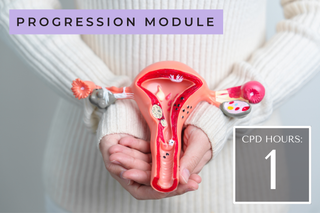
Endometriosis and Medical Cannabis
1 Credit
Endometriosis, a condition marked by the growth of endometrial tissue outside the uterus, causes severe and debilitating symptoms, making it the leading cause of chronic pelvic pain. Affecting 1 in 9 people assigned female at birth¹, endometriosis accounted for over 3,600 emergency department visits in 2021-2022 alone². Despite its prevalence, current treatment options are often invasive and carry significant health risks.
This module explores the potential of medical cannabis as an alternative treatment for endometriosis, offering symptom relief with fewer side effects.
Preview this module by watching the video above.
Estimated Duration: 1 hour
Access Duration: 12 months from date of purchase
Learning Outcomes
Upon completion of this module, you’ll be able to:
Explain the pathophysiology, symptomatology and effects of endometriosis
Identify conventional interventions for endometriosis and describe their potential strengths and drawbacks
Discuss medical cannabis' mechanisms of action and therapeutic potential for treating symptoms of endometriosis (e.g. pain, low mood, anxiety, sleep problems and nausea)
Identify considerations and risks for selecting medical cannabis products to treat endometriosis
References
¹ Armour, M., Ciccia, D., Yazdani, A., Rombauts, L., Niekerk, L. V., Schubert, R., & Abbott, J. (2023). Endometriosis research priorities in Australia. Australian and New Zealand Journal of Obstetrics and Gynaecology , 63 (4), 594-598. https://doi.org/https://doi.org/10.1111/ajo.13699
² “Endometriosis, Emergency Department Presentations.” Australian Institute of Health and Welfare, 14 Dec. 2023, www.aihw.gov.au/reports/chronic-disease/endometriosis-in-australia/contents/treatment-management/ed-presentations. Accessed 26 June 2024.
You’re viewing 1-4 of 4 products